


Table of Contents
Have you heard of these DIY pest control myths?
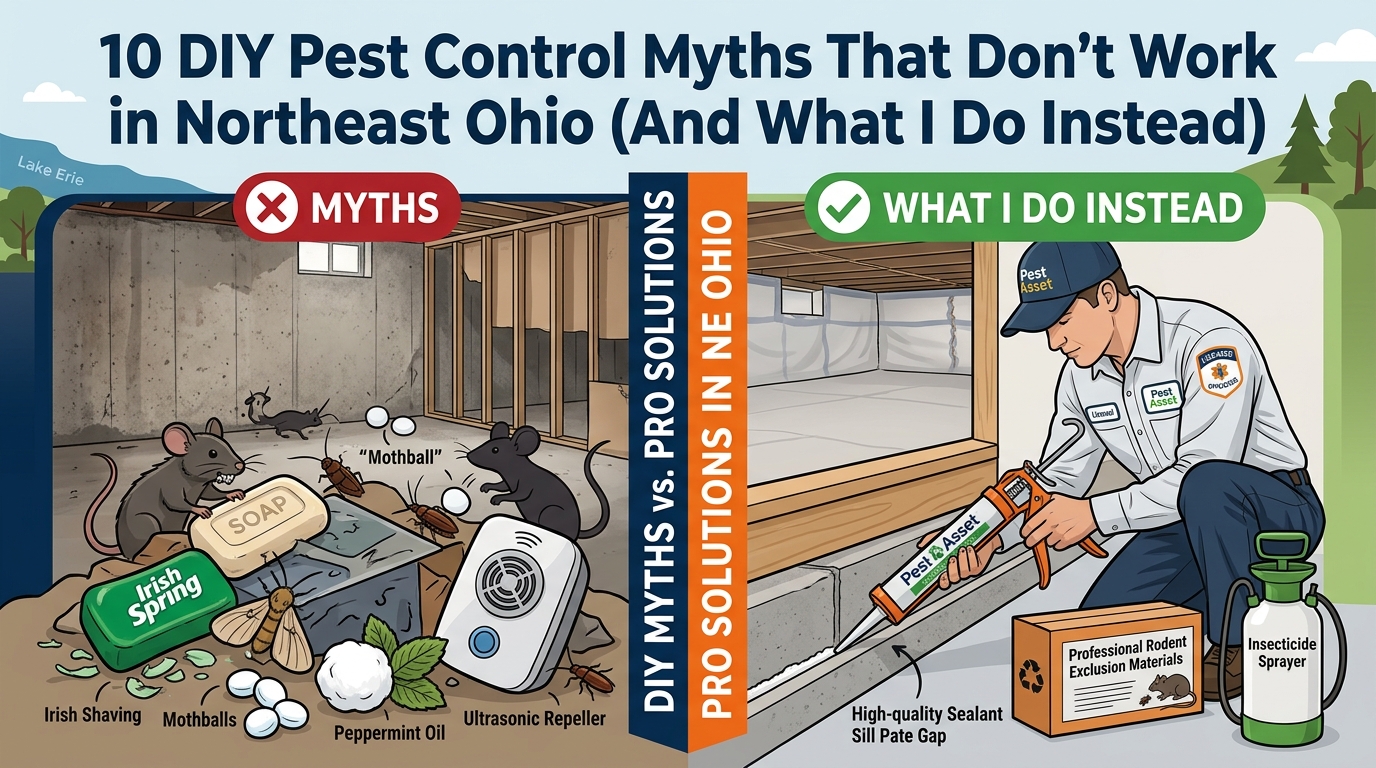
Most viral pest control “hacks” don’t kill anything. Irish Spring soap, mothballs, penny bags, dryer sheets — at best they buy you a few weeks of mildly annoyed pests before the population bounces back. At worst, they mask a problem while it multiplies behind your drywall.
I know because I’m the one who gets called in after. Seven years of crawling into basements and attics from Cleveland to Huron, and I’ve seen every one of these tricks tried, and I’ve seen every one of them fail in more or less the same way.

A scent or a sound might make a pest mildly uncomfortable for a night. It does nothing about the gap under your sill plate or the drainage issue by your foundation that’s actually inviting them in.
Here’s what I run into most often, and what I do instead.

DIY Pest Control Myths
1. Does Irish Spring Soap Keep Mice Away?
No. Mice get used to a strong scent fast, and I’ve personally found mice nesting directly on top of shaved soap bars in more than one Avon Lake garage or Cleveland bathroom. Soap doesn’t seal anything — and an unsealed foundation gap is the actual problem. If you’re hearing scratching in the walls, see our mouse and rodent control page for what real exclusion work looks like.
2. Do Ultrasonic Pest Repellers Actually Work?
Barely, and not for long. The sound waves don’t travel through walls, furniture, or insulation, so a plug-in unit in your kitchen does nothing for the mice in your attic. Pests also habituate to the noise within days or simply move a few feet out of range. I’ve replaced more than a few of these units with actual bait stations and sealed entry points and watched the activity stop within the week.
3. Will Peppermint Oil Get Rid of Spiders and Mice?
Cotton balls soaked in mint oil are a mild, very temporary deterrent at best — pests dislike strong smells, but the oil doesn’t kill anything and it doesn’t touch the moisture or food source that drew them in to begin with. Once the scent fades (usually within a couple of days), they’re back. If spiders are the specific issue, our spider control page walks through what a real perimeter treatment covers.
4. Does Bleach Kill Ant or Termite Trails?
Bleach treats whatever surface it touches and nothing else. It doesn’t soak into wood or soil, which is where an ant or termite colony’s actual trails and nest sites live. I still get calls from folks who’ve bleached a kitchen baseboard for two weeks straight and can’t figure out why the ants keep coming back — the nest was never in the baseboard. For species-specific biology, our Pest Library ants page is a good starting point before you try to treat anything yourself.
Call or text (440) 899-2847 if you’ve already tried a few of these — no judgment, I hear it every week. I’ll tell you honestly whether it’s something quick or something that needs a real treatment plan.
5. Do Bug Bombs (Foggers) Solve a Heavy Infestation?
This is the one that actually makes things worse. A total-release fogger only kills what’s out in the open air at the moment it goes off. It doesn’t reach roaches, fleas, or bed bugs hiding in wall voids, mattress seams, or behind appliances — and the chemical cloud often just scatters them deeper into the house, away from the areas you actually treated. I’ve walked into more than one Lorain County home where a fogger turned a manageable roach problem into an infestation spread across three rooms.
6. Does a Bag of Pennies Keep Flies Off My Patio?
No — this one’s pure folklore. The idea that water and pennies refract light and confuse a fly’s eyes has been tested and shown to do essentially nothing to houseflies or fruit flies. If flies are a recurring problem on an Avon Lake or Bay Village patio, it’s almost always a moisture or food-source issue nearby — a compost pile, a drainage spot, or pet waste — not a lighting trick.
7. Does Vinegar Kill Bed Bugs?
Vinegar can kill a few exposed bugs on contact by suffocation, but it doesn’t penetrate bed bug eggs and it’s nowhere close to strong enough to reach a breeding population hidden in mattress seams and box spring frames. Ohio State University Extension notes that Ohio has become a genuine bed bug hotspot, with Cleveland regularly ranking among the most infested U.S. cities — this isn’t a rare problem in our area. Home remedies like vinegar sprays tend to just scatter and stress a colony rather than eliminate it, which makes professional treatment take longer once you do call someone in.
8. Do Mothballs Keep Snakes, Bats, or Squirrels Out of My Attic?
Mothballs are naphthalene or paradichlorobenzene — both are registered pesticides, not a general-purpose repellent, and the label only covers fabric pests like moths. Using them for wildlife, especially scattered loose in a living space or a poorly ventilated attic, releases fumes that are genuinely hazardous to people and pets. The Ohio Department of Agriculture regulates pesticide use in the state and is clear that any pesticide product has to be used according to its label, on the sites the label allows — mothballs as squirrel repellent doesn’t qualify. On top of the legal issue, most wildlife will simply ignore the smell if the attic still offers warmth and shelter.

9. Do Cucumber Peels Keep Ants and Roaches Away?
There’s some anecdotal support for cucumber compounds deterring a few outdoor garden pests, but it does essentially nothing for ants or roaches already foraging indoors for food and water. I’ve seen peels left out on a Westlake kitchen counter go moldy before they did anything about the ant trail running along the same counter.
10. Does Boiling Water Poured Down an Ant Hill Destroy the Colony?
It kills whatever ants it touches on the way down, but the water cools fast as it moves through the upper tunnels and rarely reaches the deep chambers where the queen actually is. The surviving colony typically just rebuilds a few feet away — which is why the same ant hill in the same yard tends to “come back” every year even after repeated boiling-water treatments.
The Real Reason DIY Fixes Fall Short
Every myth on this list shares the same flaw: it treats the symptom you can see and ignores the thing actually causing it — a gap, a moisture source, a food supply, or a nest you can’t get to without professional-grade product and equipment. That’s the gap between a home remedy and licensed pest control.
It’s also the reason I do things differently than a franchise operation. When you call Pest Asset, you get me — the same licensed applicator who inspects your foundation is the one who comes back if the problem isn’t fully gone. There’s no dispatcher assigning you whoever’s on shift that week.
Ready to stop guessing? Call or text (440) 899-2847 and I’ll walk your property with you, tell you honestly what’s driving the activity, and give you a straight-up quote — no franchise sales script.
Every treatment comes with a two-part guarantee: give it 14 days to work, and if you’re still seeing activity after that, I’ll come back and retreat at no charge within a 30-day window.
FAQ
Why doesn’t [mothballs / dryer sheets / soap / oil] actually get rid of pests? Most home remedies rely on scent or texture to mildly annoy a pest for a few days. None of them address the entry points, moisture, or food source pulling pests into the house, so populations recover once the smell fades.
Is it ever okay to try a DIY fix before calling a professional? Sealing obvious gaps, fixing standing water, and general cleanup are genuinely useful and worth doing yourself. Sprays, foggers, and repellents aimed at an active infestation are where DIY tends to backfire, since they can scatter pests deeper into the structure instead of eliminating them.
Why do bug bombs make roach and flea problems worse instead of better? Foggers only kill insects out in the open air at the moment of release. Roaches and fleas hiding in cracks, wall voids, and furniture survive and often relocate to untreated parts of the house, making the infestation harder to track down afterward.
Does cold weather really push more pests into Avon Lake and Avon-area homes? Yes. As outdoor temperatures drop, mice, spiders, and centipedes move toward warmth, and Ohio’s freeze-thaw cycle opens new foundation gaps every winter that weren’t there the year before — even in houses that seemed fully sealed the previous season.
How do I know it’s time to stop DIYing it and call someone? If you’ve tried a home remedy for more than a week or two with no real drop in activity, or if you’re seeing pests in multiple rooms rather than one isolated spot, that’s usually a sign the source hasn’t been addressed and it’s time for a proper inspection.

