


Table of Contents
If you’ve spotted large, aggressive black and white wasps around your Northeast Ohio property, you’re likely dealing with bald-faced hornets. These formidable insects are becoming increasingly common in communities like Avon Lake, Westlake, Rocky River, and Fairview Park, creating serious concerns for homeowners and their families.
Bald-faced hornets in Ohio aren’t just another backyard nuisance – they’re one of the most aggressive stinging insects you’ll encounter, capable of delivering multiple painful stings and swarming perceived threats. Understanding their behavior, identifying their massive nests, and knowing when to call for professional help could be the difference between a peaceful summer and a dangerous encounter.

What Are Bald-Faced Hornets?
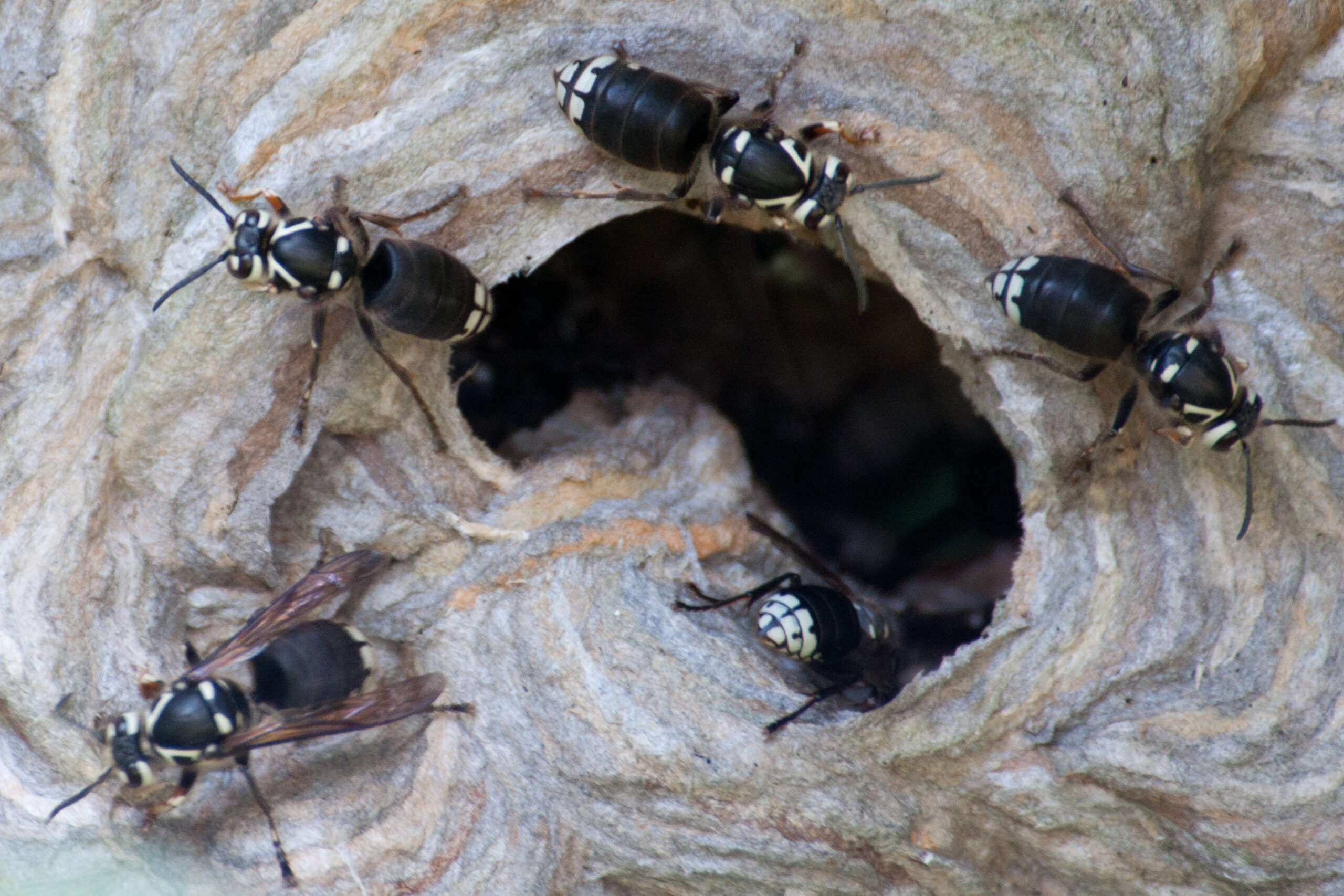
Despite their name, bald-faced hornets (Dolichovespula maculata) aren’t true hornets at all – they’re actually large wasps closely related to paper wasps and yellowjackets. These black and white striped insects earned their “bald-faced” moniker from the distinctive white markings on their face, which make them easily recognizable among Ohio’s stinging insects.
Bald-faced hornets in Ohio are significantly larger than most wasps, measuring between ¾ and 1 inch in length. Their imposing size, combined with their aggressive nature, makes them one of the most feared stinging insects in the Cleveland metropolitan area and surrounding suburbs.
Physical Characteristics
Identifying bald-faced hornets is crucial for Northeast Ohio residents:
- Size: Noticeably larger than common wasps, reaching up to 1 inch in length
- Coloration: Predominantly black with white markings on the face, thorax, and abdomen
- Body structure: Robust, muscular build with a defined waist
- Wings: Clear with a slight smoky tint
- Antennae: Black with white tips in females
Bald-Faced Hornet Behavior and Lifecycle
Understanding the behavior patterns of bald-faced hornets in Ohio helps residents of Avon Lake, Westlake, and neighboring communities prepare for seasonal encounters. These insects follow a predictable annual cycle that directly impacts when they pose the greatest threat to humans.
Spring Emergence (April-May)
In Northeast Ohio, bald-faced hornet queens emerge from winter hibernation as temperatures consistently reach the 60s. These fertilized queens begin scouting for ideal nesting locations, often choosing:
- High branches in mature trees (10-15 feet off the ground)
- Building eaves and overhangs
- Utility poles and structures
- Thick shrubs and hedges
During this phase, individual queens are less aggressive as they focus entirely on nest establishment. However, they’re already selecting locations that will become major problems by mid-summer.
Colony Development (June-August)
By June, bald-faced hornets in Ohio colonies are rapidly expanding. They live in colonies that may contain between 100 and 400 members at their peak, with some exceptional nests housing even more workers. Once the hive grows enough, the queen ceases nest building activities and stops caring for her young. For the remainder of the season, the queen only performs the task of reproduction. The workers forage for food, build the nest, defend the hive and care for the brood.
This is when Cleveland suburb residents notice increased activity around their properties. Workers become highly territorial, aggressively defending areas up to 100 feet from their nest.
Peak Aggression (August-September)
Late summer represents the most dangerous period for encounters with bald-faced hornets in Ohio. Bald-faced hornets usually appear in late summer when populations are largest. Specifically, males emerge from unfertilized eggs and impregnate the new females for the next season in the end of the summer.
During this time, colonies are at maximum size and workers are increasingly aggressive as they prepare for winter reproduction cycles.
Identifying Bald-Faced Hornet Nests
Recognition of bald-faced hornet nests is critical for Northeast Ohio homeowners. These architectural marvels are both impressive and dangerous, requiring immediate professional attention when discovered near human activity.

Nest Characteristics
Bald-faced hornets in Ohio create distinctive nests that are unmistakable once you know what to look for:
- Size: The nest will be the size of a football or basketball when it is finished
- Material: Grey, paper-like construction made from chewed wood pulp
- Shape: Their aerial nests are grey and paper-like, but they are enclosed, unlike the open cone structure of other stinging hornets and insects, like yellowjackets and paper wasps
- Entry point: Single entrance hole near the bottom
- Location: This species can be found in paper nests typically found at least three feet above the ground in shrubs, eaves of houses, trees, porches, and utility poles
Signs of Active Nests
Residents of Avon Lake, Westlake, Rocky River, and Fairview Park should watch for these indicators:
- Constant traffic: Workers entering and exiting throughout daylight hours
- Defensive behavior: Hornets become aggressive when you approach within 20-30 feet
- Audible buzzing: A low humming sound from active nests
- Fecal staining: A key identifier is a black liquid dropping on the ground underneath the nest
Why Bald-Faced Hornets Are Dangerous
Bald-faced hornets in Ohio pose serious risks that extend far beyond typical wasp encounters. Understanding these dangers helps Northeast Ohio residents make informed decisions about professional pest control services.
Aggressive Defense Behavior
Yes, bald-faced hornets will act aggressively to protect their nest against any perceived threat, human or animal. They are sensitive to anything that enters what they consider to be their territory. They are also easily upset by loud noises, such as lawnmowers and leaf blowers.
This territorial behavior makes routine yard maintenance dangerous around active nests. Simple activities like:
- Mowing the lawn
- Trimming hedges
- Playing in the yard
- Barbecuing outdoors
Can trigger massive defensive responses from entire colonies.
Multiple Stings and Venom
Unlike bees, bald-faced hornets in Ohio can sting repeatedly without dying. Bald-faced hornets fiercely defend their nests, and each wasp is capable of stinging potential invaders multiple times. The sting from a bald-faced hornet is venomous and can cause pain and swelling for around 24 hours.
Individual hornets can deliver 5-10 stings during a single attack, and colony members coordinate their defense, meaning victims often face dozens of stings simultaneously.
Swarming Behavior
People often find themselves swarmed after unknowingly disturbing a nest. When one hornet releases alarm pheromones, dozens or hundreds of workers respond within seconds, creating life-threatening situations for anyone nearby.

Benefits of Bald-Faced Hornets (Yes, They Have Some!)
While bald-faced hornets in Ohio are dangerous to humans, they do provide ecological benefits that shouldn’t be overlooked:
Natural Pest Control
Hornets are beneficial predators that feed on other insects, particularly filth flies and blowflies. They eat lots of flies, and they even eat a ton of other yellowjackets! Their nests are usually littered with remains of yellowjackets, even staining the fiber of the hive yellow. Their favorite meals are soft bodied insects like bag worms, aphids, and caterpillars.
For Cleveland area gardeners, this means bald-faced hornets actually help control many problematic pests that damage landscaping and gardens.
Ecosystem Role
These wasps serve as both predators and pollinators, visiting flowers for nectar and inadvertently transferring pollen. They will also visit picnics and barbecues for sweets, fermented beverages, and protein-rich cuisine, which explains why they become problematic around outdoor gatherings.
Geographic Distribution in Northeast Ohio
Bald-faced hornets in Ohio thrive throughout the Cleveland metropolitan area, with particularly high populations in suburbs that offer ideal nesting conditions:
High-Risk Communities
- Avon Lake: Mature tree coverage and lakefront properties provide ideal nesting sites
- Westlake: Established neighborhoods with large yards and older trees
- Rocky River: Dense suburban canopy creates a perfect hornet habitat
- Fairview Park: A Mix of residential and park areas offers abundant nesting opportunities
- Bay Village: Lakefront location with mature landscaping
- Lakewood: Urban forest canopy provides numerous nesting sites
Seasonal Activity Patterns
In Northeast Ohio’s climate, bald-faced hornets in Ohio follow predictable seasonal patterns:
April-May: Queens establish new nests June-July: Rapid colony growth August: Peak population and aggression September: Reproductive cycle and maximum danger October: Colony decline and abandonment November-March: Dormant period
Prevention and Property Management
Preventing bald-faced hornets in Ohio from establishing colonies on your property requires proactive management throughout the active season.
Early Season Prevention (April-June)
- Regular property inspections: Weekly checks of eaves, trees, and structures
- Removal of food sources: Secure garbage cans and clean up outdoor dining areas
- Landscaping management: Trim vegetation away from structures
- Professional monitoring: Schedule early season inspections with pest control professionals
Mid-Season Vigilance (July-August)
- Avoid nest areas: Identify and mark problematic zones
- Modify outdoor activities: Plan yard work during early morning or evening hours
- Emergency preparedness: Keep first aid supplies accessible
- Professional assessment: Contact pest control if suspicious activity is observed
When to Call Professional Pest Control
Attempting DIY removal of bald-faced hornets in Ohio nests is extremely dangerous and often illegal in some municipalities. Professional intervention becomes essential when:
- Nests are located near high-traffic areas
- Children or pets frequently use nearby spaces
- Anyone in the household has stinging insect allergies
- Nests exceed softball size
- Multiple hornets are observed daily around the property
Professional Removal Process
Licensed pest control technicians use specialized equipment and techniques to safely eliminate bald-faced hornet colonies:
- Assessment: Detailed evaluation of nest location and colony size
- Safety preparation: Protective equipment and area isolation
- Treatment application: Professional-grade insecticides applied directly to the nest
- Follow-up monitoring: Ensuring complete colony elimination
- Nest removal: Safe disposal of abandoned nest structure

Frequently Asked Questions About Bald-Faced Hornets in Ohio
Q: Are bald-faced hornets more aggressive than other wasps?
A: Yes, bald-faced hornets in Ohio are significantly more aggressive than paper wasps or even yellowjackets. They have larger colonies, more potent venom, and defend much larger territories around their nests.
Q: Can I remove a bald-faced hornet nest myself?
A: This is strongly discouraged and extremely dangerous. Professional pest control services have specialized equipment, protective gear, and training necessary for safe removal. DIY attempts often result in multiple stings and incomplete nest elimination.
Q: When are bald-faced hornets most active during the day?
A: These hornets are most active during warm, sunny days between 10 AM and 4 PM. They’re less active during cool, cloudy, or rainy weather, making these conditions safer for outdoor activities near known nests.
Q: How far will bald-faced hornets travel from their nest?
A: Workers typically forage within 100-200 yards of their nest, but they’ll aggressively defend areas up to 100 feet from the nest entrance. This means a nest in a tall tree can create a danger zone covering most residential lots.
Q: Do bald-faced hornets reuse nests?
A: No, As with all wasps, bald-faced hornet nests are only used for one season. However, new queens may establish nests in similar locations the following year, making ongoing prevention important.
Q: What should I do if I’m stung by a bald-faced hornet?
A: Remove any embedded stingers, apply ice to reduce swelling, and monitor for allergic reactions. Seek immediate medical attention if you experience difficulty breathing, widespread swelling, or other severe symptoms. Multiple stings always warrant medical evaluation.
Q: Are bald-faced hornets active at night?
A: These hornets are primarily active during daylight hours and return to their nests at dusk. However, bright lights can attract and confuse them, occasionally leading to nighttime encounters near illuminated areas.
Q: How can I tell if there’s a nest on my property?
A: Look for increased wasp activity in specific areas, especially workers flying to and from the same location. You might also notice the grey, paper-like nest structure in trees or under building overhangs, along with black staining on surfaces below active nests.

Protect Your Family from Bald-Faced Hornets
Bald-faced hornets in Ohio represent a serious threat to residents throughout Avon Lake, Westlake, Rocky River, Fairview Park, and surrounding Cleveland suburbs. Their aggressive nature, painful stings, and swarming behavior make professional intervention essential for safe nest removal.
Don’t risk your family’s safety attempting DIY hornet removal. The specialists at Pest Asset have the experience, equipment, and expertise to safely eliminate bald-faced hornet colonies from your Northeast Ohio property.
Why Choose Pest Asset for Bald-Faced Hornet Control?
- Local expertise: Deep understanding of Northeast Ohio pest behavior and seasonal patterns
- Safety first: Professional-grade protective equipment and proven removal techniques
- Comprehensive service: Complete nest elimination with follow-up monitoring
- Emergency response: Rapid response for dangerous nest locations
- Family-friendly: Safe methods that protect children, pets, and beneficial insects
Don’t wait until someone gets hurt. Contact Pest Asset today for a free property assessment and protect your family from dangerous bald-faced hornet encounters.
Call (440) 899- BUGS or visit pestasset.com to schedule your consultation. We serve Avon Lake, Westlake, Rocky River, Fairview Park, and all Cleveland suburbs.
Professional pest control isn’t just about eliminating problems – it’s about protecting the people and places you care about most.

