

Lakewood Ant Control | Pest Asset — Local Experts Serving 44107
Serving Birdtown, Clifton Park, the Gold Coast, Downtown Lakewood, and every block in between.
Lakewood Has an Ant Problem — And It’s Not Your Fault
Lakewood, Ohio is one of the most densely populated cities in the state, packing roughly 50,000 residents into just five square miles along the southern shore of Lake Erie. Those are exactly the conditions ants thrive in: older homes with aging foundations, mature tree canopies, proximity to water, and neighborhood gardens butting right up against century-old worker’s cottages and Victorian estates.
If you’ve spotted a trail of ants weaving across your kitchen floor or discovered a cluster of large black ants near a damp window frame, you’re far from alone. Lakewood ant control is one of the most common service calls we receive — and for good reason.
At Pest Asset, we specialize in residential and commercial ant control in Lakewood, Ohio. We’re not a national chain staffed by rotating technicians who don’t know your neighborhood. We’re local, we’re responsive, and we know why a home on Thrush Avenue in Birdtown has different ant pressures than a high-rise condo on the Gold Coast.
Call (440) 899-2847 or request a free quote online — same-day service often available.

Ant Species Commonly Found in Lakewood, OH
Effective Lakewood ant control starts with correct identification. Different species behave differently, nest differently, and respond to different treatments. Applying the wrong approach doesn’t just fail — it can cause certain species (like pharaoh ants) to scatter and multiply.
Carpenter Ants (Camponotus pennsylvanicus)
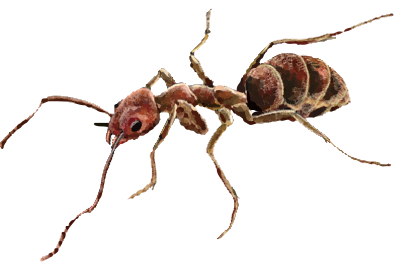
The largest ant you’ll encounter in a Lakewood home — workers range from ¼ to ¾ inch long, typically black. They don’t eat wood, but they excavate galleries inside it to build nests, causing real structural damage over time. They’re especially drawn to moisture-damaged wood around window frames, roof eaves, and basement sills. Spotting large black ants near a window or finding sawdust-like frass near baseboards are key warning signs. Learn more from Ohio State University Extension’s guide to carpenter ants.
Odorous House Ants (Tapinoma sessile)
Small (about 1/8 inch), dark brown or black, and infamous for the sour, rotten-coconut odor they release when crushed. These are the ants most Lakewood homeowners discover marching through their kitchens. They love sweets and tend to move their nests every few weeks, which makes DIY baiting inconsistent. Colonies can exceed 10,000 workers.
Pavement Ants (Tetramorium caespitum)
Small, dark brown ants that nest beneath sidewalk slabs, driveways, and foundation edges — which puts nearly every Lakewood home at risk. They enter through cracks in concrete and foundation walls, typically showing up in basements and along ground-floor baseboards. Common in older neighborhoods like Downtown Lakewood around Detroit Avenue and Warren Road.
Pharaoh Ants (Monomorium pharaonis)
Tiny (about 1/16 inch), pale yellow, and considered one of the most difficult ant species to eliminate. They’re a particular challenge in multi-family buildings and condominiums — including the Gold Coast high-rises and apartment buildings along Clifton Boulevard. Improper treatment causes colonies to “bud,” splitting into multiple new nests throughout the building. Professional treatment is essential.

Neighborhoods We Serve in Lakewood, OH
We provide ant control services throughout all of Lakewood (44107), including:
- Birdtown — Lakewood’s historic National Register district, where the dense streets named Robin, Plover, Lark, and Thrush are home to century-old worker’s cottages with the foundation characteristics that make ant entry easy. We treat these homes with methods that are effective without compromising historic structures.
- Clifton Park — Lakewood’s northwest corner, with Victorian estates and large older homes perched along the Lake Erie bluffs. Carpenter ant pressure is elevated here given the mature trees and older structural wood.
- The Gold Coast — High-rise condominiums and apartment buildings along the lakefront require a different approach, especially for pharaoh ants. We serve both individual units and building management.
- Downtown Lakewood (Detroit Ave / Warren Road corridor) — Restaurants, retail, and mixed-use buildings in Lakewood’s commercial core face unique ant pressures. We offer discreet commercial service for Detroit Avenue businesses.
- The Arts District / Beck Center area — Residential streets in west Lakewood around the Beck Center for the Arts.
- Madison Avenue corridor — Dense urban residential, including the duplex-heavy streets near Madison Park.
We also serve neighboring communities including Rocky River, Fairview Park, North Olmsted, Bay Village, and Westlake.

Additional Resources
- OSU Extension: Ants In and Around the Home — Ohio State University’s fact sheet on identifying and managing common ant species in Ohio
- EPA Pesticide Safety — How to evaluate pest control products safely
- National Pest Management Association — Industry standards for professional pest control
- Pest Asset Pest Library — Identify the pest before calling
- Pest Asset Residential Services — Our full range of home pest control programs
- Spider Control — Other common home-invading pests we treat


Why Lakewood Homes Are Especially Vulnerable to Ant Infestations
Lakewood’s charm is inseparable from its architecture and geography — but those same qualities create ideal conditions for ants to move in.
Lake Erie’s “Moisture Effect”
The lake’s proximity keeps Lakewood notably humid, especially in spring and early summer. That persistent moisture softens wood over time, creating perfect nesting conditions for carpenter ants, which tunnel through damp structural lumber without consuming it. Basements and crawl spaces in older Lakewood homes are particularly susceptible.
Historic Housing Stock
Lakewood’s neighborhoods — from the National Register Historic District in Birdtown to the grand Victorian mansions along Grace and Cohassett Avenues in Clifton Park — feature beautiful old homes with the hairline foundation cracks, aging utility penetrations, and settled mortar that ants exploit as entry points. A pavement ant colony doesn’t need more than a crack in a basement slab to establish itself indoors.
Dense Urban Landscaping
Lakewood Park, the Rocky River Reservation corridor, Kauffman Park, and the neighborhood pocket parks scattered throughout the city mean mature trees, mulch beds, and soil close to foundations are everywhere. Ant colonies nest in mulch beds and under root systems just feet from front doors.
Year-Round Foraging Pressure
Lakewood’s ant season typically runs May through September, when odorous house ants and pavement ants are most active. But carpenter ants can remain active well into fall, and pharaoh ants — a growing problem in multi-unit buildings along Clifton Boulevard and the Gold Coast — are year-round pests that use a building’s own heating system to stay active through winter.

Pest Asset’s Approach to Ant Control in Lakewood
Our Lakewood ant extermination process is built around one idea: treat the colony, not just the workers you can see.
Step 1 — Free On-Site Inspection
We start with a thorough walkthrough of your property — interior and exterior. We’re looking for active trails, entry points (foundation gaps, utility penetrations, window frames), moisture sources, and evidence of nesting. We’ll identify the species involved, because a carpenter ant situation and an odorous house ant situation require completely different responses.
Step 2 — Targeted Treatment Plan
Based on the inspection, we build a plan specific to your home and the species at hand. This may include:
- Colony-targeted baiting — slow-acting, attractive bait that worker ants carry back to the nest, eliminating the queen and the colony from within. Far more effective than spray-only approaches for most species.
- EPA-registered residual treatments — applied to perimeter entry points, foundation edges, and interior trouble spots to intercept foragers and disrupt pheromone trails.
- Void and nest treatments — for carpenter ant or pharaoh ant situations where nests are located inside walls, under slabs, or in structural voids, we use targeted foam or liquid treatments directly at the source.
- Exterior perimeter barrier — a protective treatment around the foundation and entry points to prevent re-colonization.
Step 3 — Prevention Guidance
Once your infestation is resolved, we walk you through specific prevention steps for your home and neighborhood. We’ll flag moisture issues, vegetation contact points, and entry points that need sealing — the practical stuff that keeps ants out long-term.
Our Guarantee
We stand behind every treatment with a 100% satisfaction guarantee. If ants return before your next scheduled service, we come back at no additional charge.
Ant Prevention Tips for Lakewood Homeowners
Professional treatment is the most reliable solution for an active infestation, but these steps help prevent future problems:
Eliminate food and moisture attractants:
- Keep counters and floors free of crumbs, especially near stovetops and under appliances.
- Store sugar, honey, and baked goods in sealed containers.
- Fix leaky faucets and pipes — odorous house ants and carpenter ants are strongly attracted to moisture.
- Empty pet food bowls between meals and store dry pet food in airtight bins.
Seal entry points:
- Caulk gaps around window frames, door thresholds, and where utility lines enter the foundation.
- Check basement sill plates for gaps, especially in older Lakewood homes where settling creates cracks.
- Apply weatherstripping to exterior doors that don’t seal tightly.
Manage your yard:
- Keep mulch beds pulled back at least six inches from the foundation.
- Trim branches and shrubs that touch or overhang the exterior walls.
- Store firewood off the ground and at least 20 feet from the house.
- Address any areas of standing water or poor drainage in the yard.
For more on integrated pest management strategies, the National Pest Management Association and Ohio State University Extension are both excellent, science-based resources.
Frequently Asked Questions — Lakewood Ant Control
Q: Why do I keep getting ants in my Lakewood home every spring?
A: Spring is peak ant season across Northeast Ohio. As soil temperatures rise, colonies that overwintered underground or in wall voids become active and begin sending foragers out for food. Lakewood’s humid, lake-influenced climate accelerates this activity. A preventive perimeter treatment in early to mid-April — before you see ants inside — is the most effective way to interrupt this cycle.
Q: I found large black ants near my window. Are these carpenter ants, and should I be worried?
A: Likely yes. Carpenter ants are the largest ant species you’ll encounter in a Lakewood home, and they’re drawn to moisture-damaged wood — especially around window frames, soffits, and basement sill plates. While they don’t eat wood like termites, the galleries they excavate can weaken structural members over time. Finding a few large ants doesn’t necessarily mean extensive damage, but it warrants a professional inspection to locate the nest and assess any wood damage. Don’t wait on this one.
Q: What are the tiny dark ants in my kitchen — and why won’t the stuff from the hardware store get rid of them?
A: Those are almost certainly odorous house ants or pavement ants — the most common indoor ant species in Lakewood. Store-bought sprays kill the workers you see but don’t reach the queen or the colony. Worse, some sprays trigger a “scatter” response, causing the colony to split and establish satellite nests elsewhere in the structure. Professional colony-targeted baiting is significantly more effective for these species.
Q: Do ant infestations in Lakewood’s older homes cause structural damage?
A: It depends on the species. Pavement ants and odorous house ants are nuisance pests — they contaminate food and are frustrating to deal with, but they don’t damage your home’s structure. Carpenter ants are a different matter. Left untreated in a home with any moisture issues (very common in Lakewood’s older housing stock), a carpenter ant colony can cause real structural damage over months and years. If you’re seeing large black ants, don’t dismiss it.
Q: I live in a condo or apartment building on Clifton Boulevard / the Gold Coast. Can Pest Asset treat multi-unit buildings?
A: Yes. We serve both individual units and work with building management for whole-building treatment programs. Pharaoh ants and odorous house ants are especially common in Lakewood’s multi-family buildings — and they spread between units through wall voids and utility runs. Whole-building treatment coordination is the most effective approach. Contact us to discuss options for your building.
Q: How long does ant treatment take to work?
A: It depends on the treatment method and the species. Residual perimeter treatments begin working immediately and typically reduce forager activity within a few days. Colony-targeted baiting takes longer — often 1–3 weeks — because workers need time to carry the bait back to the nest and share it with the colony. This slower timeline is actually a sign it’s working: the bait reaches the queen. We’ll set realistic expectations for your specific situation during the inspection.
Q: Is the treatment safe for my kids and pets?
A: Yes. Pest Asset uses EPA-registered products applied according to label directions. We use targeted application methods that minimize exposure — baits are placed in areas accessible to ants but not to children and pets, and perimeter treatments are applied externally and allowed to dry before anyone re-enters treated areas. We’re also happy to discuss any specific sensitivities or concerns before we begin.
Q: Why does my Lakewood home have ants even though it’s clean?
A: Cleanliness reduces ant attractants, but it’s rarely the whole picture. Ants enter Lakewood homes for moisture as much as food — a slow leak under the kitchen sink or condensation near a basement wall can draw them in even in an otherwise spotless home. Entry points in the foundation and exterior walls are often the real culprit. Our inspection looks at the full picture, not just the kitchen.
Q: What’s the difference between Pest Asset and a national pest control chain for Lakewood ant control?
A: Local knowledge and accountability. We’re a locally owned business serving the west side of Cleveland — we know Lakewood’s housing stock, its neighborhoods, and the seasonal pest patterns specific to this part of Cuyahoga County. When you call us, you talk to the technician. There’s no call center, no upselling, and no rotating crew. Our reviews speak to that — and our 100% satisfaction guarantee backs it up.
Ready to Reclaim Your Home? Get a Free Quote Today.
Pest Asset — Lakewood’s trusted ant control specialists.
📞 (440) 899-2847 🌐 pestasset.com 📍 Serving all of Lakewood (44107) and surrounding west side communities
Same-day and next-day appointments frequently available. Free inspection and quote — no obligation.
We also handle roach control, spider extermination, mouse and rodent removal, and full residential pest control services for Lakewood homeowners.
Pest Asset proudly serves Lakewood, Rocky River, Fairview Park, North Olmsted, Bay Village, Westlake, Brooklyn, Avon, Avon Lake, Lorain, Elyria, and communities throughout Cuyahoga and Lorain Counties.