


Table of Contents
TLDR: Spring cleaning is your single most powerful weapon against pest infestations in Northeast Ohio. When you deep-clean, declutter, seal entry points, and eliminate moisture during your spring cleaning routine, you remove the food, water, and shelter that ants, rodents, mosquitoes, and cockroaches need to survive in your home. Homeowners in Avon Lake, Lorain, Bay Village, Westlake, and Sheffield Lake should complete their spring cleaning pest prevention checklist between late March and mid-April — before pest season peaks in May. For professional backup, contact Pest Asset at (440) 899-2847 or visit pestasset.com.
Quick Answer: Does Spring Cleaning Actually Prevent Pests?
Yes — spring cleaning is one of the most effective pest prevention strategies a homeowner can take. Pests invade homes in search of three things: food, water, and shelter. A thorough spring cleaning systematically eliminates all three. When you clean behind appliances, store food in sealed containers, fix leaky pipes, declutter storage areas, and seal cracks in your foundation, you make your home dramatically less attractive to the ants, cockroaches, rodents, and other pests that emerge aggressively every spring in Northeast Ohio.
1. Why Spring Cleaning Is the Foundation of Pest Prevention in Northeast Ohio
Spring cleaning has been a household tradition for generations — but most homeowners don’t realize just how directly their annual deep clean connects to whether or not they’ll share their home with pests this season. In Northeast Ohio, where Lake Erie’s humid microclimate accelerates pest emergence and the combination of harsh winters and warm springs creates dramatic seasonal swings in insect and rodent behavior, spring cleaning isn’t just about freshness. It’s frontline pest defense.
Here’s the biological reality: every spring, as temperatures climb above 50°F — typically in late March and April in the Avon Lake and Lorain County area — insects and rodents that have been dormant, sheltering, or quietly nesting inside your walls, attic, and crawl space wake up hungry and ready to breed. Ant colonies send scouts to find food. Mice that sheltered in your basement over winter begin multiplying. The homes that experience the worst pest problems in May and June are almost always the ones where spring cleaning was either skipped or done superficially.
The good news: a deliberate, pest-focused spring cleaning routine, combined with professional perimeter treatment from a company like Pest Asset, can cut your infestation risk dramatically — and save you thousands of dollars in potential damage and extermination costs down the road.
According to the U.S. Environmental Protection Agency, the most effective approach to home pest management is Integrated Pest Management (IPM) — a framework that prioritizes prevention first, including eliminating the food, water, and shelter sources that attract pests. Spring cleaning is essentially IPM in action.

2. The Pest Threat Landscape in Northeast Ohio
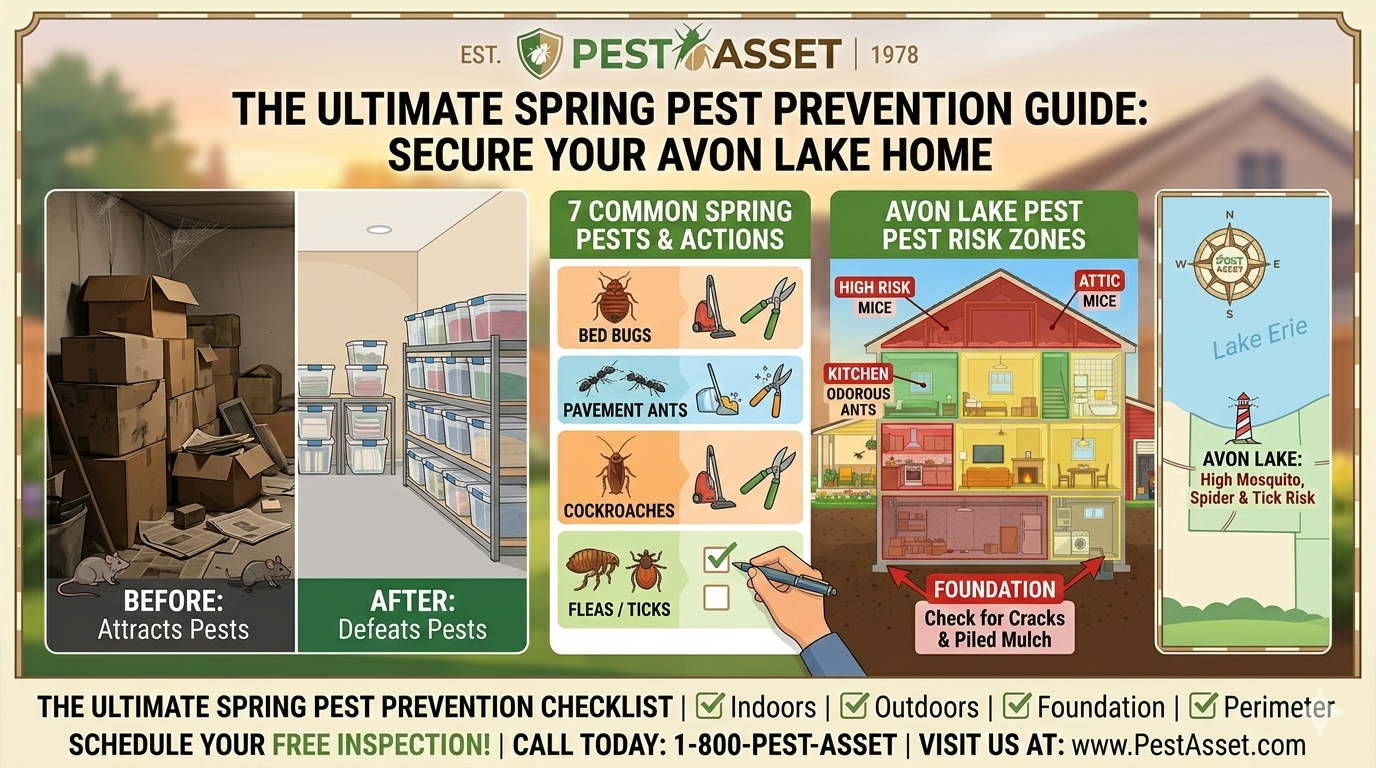
Before diving into your spring cleaning checklist, it helps to understand exactly what you’re up against. These are the pests most commonly triggered or worsened by poor spring cleaning habits in the Avon Lake, Lorain, Westlake, Bay Village, and Sheffield Lake areas:
🐜 Ants
Ants are the most common spring cleaning-related pest complaint in Northeast Ohio. Pavement ants, odorous house ants, and the destructive carpenter ant all become highly active in spring. They enter through the tiniest cracks and are drawn directly to crumbs, sticky residue, exposed fruit, and unsealed dry goods — all things a good spring cleaning addresses.
🐭 Mice & Rats
Rodents that have been quietly nesting in your walls, attic, or crawl space over winter begin moving more aggressively in spring. Cluttered basements and garages with cardboard boxes are their preferred habitat. Spring cleaning — particularly decluttering and transitioning to sealed plastic storage — is one of the most effective rodent deterrents available to homeowners.
🪳 Cockroaches
Cockroaches are moisture-seekers. They congregate under sinks, behind refrigerators, and in bathroom cabinetry — exactly the places most people skip during regular cleaning. A spring cleaning deep-dive into these hidden areas removes the grime, organic buildup, and standing water that cockroaches rely on.
🦟 Mosquitoes
While mosquitoes won’t be deterred by indoor spring cleaning, your outdoor spring cleaning routine — specifically addressing standing water in gutters, low spots in the yard, and containers — is the most effective DIY mosquito prevention available.
🐝 Stinging Insects
Yellow jackets, paper wasps, and hornets begin building new nests every spring, favoring eaves, attic vents, and deck joists. An early exterior inspection during your spring cleaning walkthrough gives you the chance to spot and address small, developing nests before they become major problems by midsummer.
🕷️ Spiders
Spiders thrive in dark, undisturbed, cluttered spaces — basements, attics, closets, and the underside of furniture. Regular spring cleaning vacuuming and decluttering removes their preferred habitats and disrupts their webs before populations build.

3. Room-by-Room Spring Cleaning Pest Prevention Guide
This is where spring cleaning gets powerful. Rather than a generic top-to-bottom clean, this guide is structured around how each room in your home functions as either a pest attractant or a pest barrier — and what to do about it.
🍳 Kitchen: Your Highest-Priority Spring Cleaning Zone
The kitchen is the number one destination for ants, cockroaches, rodents, and pantry pests. It provides the two things every pest needs most: food and water. Your spring cleaning kitchen deep-dive should go well beyond the usual wipe-down.
Spring cleaning tasks for the kitchen:
- Pull out the refrigerator and stove completely and clean behind and beneath them — crumbs and grease accumulate here and are invisible during regular cleaning
- Empty every cabinet and pantry shelf, wipe down the interior, and inspect for signs of pest activity (droppings, gnaw marks, shed skins)
- Transfer all dry goods — cereal, flour, sugar, rice, oats, pet food — into hard-sided, airtight containers. Cardboard boxes and paper bags offer no barrier to rodents or pantry moths
- Clean the garbage can inside and out with soap and water; replace the liner
- Check under the sink for leaky pipes, moisture damage, or evidence of rodent activity
- Clean the inside of the dishwasher and run a cleaning cycle — food residue in the door seal and drain area attracts cockroaches
- Inspect cabinet hinges and the spaces around pipes under the sink for gaps — seal with caulk or steel wool
- Don’t forget the toaster, microwave, and coffee maker — crumb trays and interior surfaces are prime attractants
🚿 Bathroom: Moisture Control Is the Goal
Many of the most persistent spring pests — cockroaches, silverfish, and drain flies — are moisture-seekers above all else. The bathroom is their second favorite room in the house.
Spring cleaning tasks for the bathroom:
- Check under every sink cabinet for dripping pipes, moisture stains, or soft flooring — signs of a slow leak that creates ideal pest habitat
- Check the base of the toilet and around the tub and shower for gaps in caulking or signs of seepage
- Clean sink, shower, and tub drains — organic buildup in drains is a food source and breeding site for drain flies and cockroaches
- Wash bath mats and shower curtains/liners
- Ensure bathroom exhaust fans are working properly — humidity control is moisture control, which is pest control
- Inspect walls and flooring for soft spots or discoloration that could indicate water damage behind the surface
🛏️ Bedrooms & Closets: The Hidden Pest Zone
Bedrooms seem like low-risk areas, but closets and under-bed spaces are prime real estate for clothes moths, carpet beetles, silverfish, spiders, and — in homes with gaps in the exterior wall — rodents.
Spring cleaning tasks for bedrooms:
- Vacuum under the bed, along baseboards, and in closet corners
- Launder or dry-clean wool, silk, and natural fiber clothing before storing — clothes moths specifically target these materials, and washing removes any eggs before you pack winter clothes away
- Replace cardboard storage boxes with sealed plastic bins
- Inspect window frames and sills for gaps or damaged weatherstripping
- Check closets for signs of rodent activity, particularly in homes where closets share a wall with an exterior or garage
🧺 Laundry Room: Another Moisture Hot Spot
Spring cleaning tasks for the laundry room:
- Check washing machine supply hoses and drain connections for leaks
- Pull the washer and dryer away from the wall and clean behind them
- Inspect the dryer vent — rodents and birds occasionally nest in dryer vents, and lint buildup creates both a pest habitat and a fire hazard
- Clean out the lint trap housing thoroughly
📦 Basement, Attic & Garage: The Pest Penthouse
These three spaces are where pest problems most often originate and where they’re most likely to go undetected until they’re serious. Your spring cleaning efforts here may be the most impactful of all.
Spring cleaning tasks for storage spaces:
- Do a full declutter — donate, discard, or properly store anything that doesn’t need to be there
- Replace all cardboard boxes with sealed plastic bins. Rodents use cardboard as nesting material and can chew through it easily
- Inspect every corner, joist, and wall for rodent droppings, gnaw marks, mud tubes (termites), or spider webs
- Check attic insulation for signs of nesting — disturbed or compressed insulation, shredded material, and droppings are all warning signs
- Inspect the foundation from the inside — look for cracks, gaps around utility penetrations, and evidence of moisture intrusion
- Ensure basement windows are sealed and that window well covers are in place
- Check garage door weatherstripping — worn or torn strips are a wide-open entry point for rodents and insects

4. Outdoor Spring Cleaning: Your Yard and Perimeter
Your indoor spring cleaning is only half the battle. The yard and foundation perimeter are where most pest problems begin. Thorough outdoor spring cleaning removes the conditions that attract pests before they ever reach your door.
Gutters and Downspouts Clogged gutters are one of the top pest attractors on the exterior of any home. Standing water in gutters breeds mosquitoes and attracts ants and beetles. Debris in gutters provides nesting material for wasps and birds. Clean gutters completely in early spring and ensure downspouts direct water at least 3–4 feet away from the foundation.
Foundation Perimeter
- Inspect the entire foundation for cracks, gaps around utility penetrations, and areas where the soil has settled away from or washed against the foundation
- Seal all cracks with exterior-grade caulk or hydraulic cement
- Maintain a gap of at least 18–24 inches between mulch, shrubs, and your foundation — mulch beds that press against the foundation create a warm, moist pest highway directly into your home
- Remove any wood, lumber, or debris in contact with soil near the foundation — prime termite habitat
Yard Cleanup
- Remove leaf litter, fallen branches, and decaying wood from the yard — these harbor termites, beetles, ants, and spiders
- Pull up old tree stumps or treat them — decaying stumps are among the most attractive termite food sources on any property
- Store firewood at least 20 feet from the house, elevated off the ground on a rack
- Rake mulch beds to keep them shallow and dry — deep, wet mulch harbors ants, termites, and many other pests
- Keep grass mowed to reduce tick, flea, and rodent habitat
- Trim all tree branches that contact or overhang the roofline — rodents use these as highways into attics
Standing Water Elimination
- Walk your entire property after a rain and identify every spot where water pools
- Address low areas with regrading, additional drainage, or French drain installation
- Clean and refresh bird baths weekly
- Empty and invert any containers, pots, tarps, or toys that collect rainwater
- Clear and inspect sump pump discharge lines
Screens, Doors & Windows
- Inspect every window screen and door screen for tears, holes, or gaps at the frame
- Replace damaged screens before mosquito season arrives in late April
- Check and replace weatherstripping on all exterior doors
- Inspect door sweeps — rodents can squeeze under a gap as small as a quarter-inch

5. The Complete Spring Cleaning Pest Prevention Checklist
Use this checklist during your spring cleaning routine each year. For Avon Lake and surrounding communities, aim to complete this between late March and mid-April.
🏠 Indoor Checklist
Kitchen
- Clean behind and beneath refrigerator and stove
- Empty, clean, and inspect all cabinets and pantry shelves
- Transfer dry goods and pet food to sealed, hard-sided containers
- Check under-sink plumbing for leaks and moisture
- Seal gaps around pipes under the sink
- Clean and empty the garbage can
Bathrooms
- Check all pipes for drips or moisture
- Recaulk around tub, shower, and toilet base if needed
- Clean all drains
- Test and clean exhaust fans
Bedrooms & Closets
- Vacuum under beds and along all baseboards
- Wash or dry-clean natural fiber clothing before storing
- Replace cardboard boxes with sealed plastic bins
- Inspect window frames for gaps
Basement, Attic & Garage
- Full declutter — remove unnecessary items
- Replace all cardboard storage with sealed plastic bins
- Inspect for droppings, gnaw marks, mud tubes, or webbing
- Check insulation condition in attic
- Inspect foundation walls for cracks from inside
- Check garage door weatherstripping
Whole Home
- Seal any cracks in walls, baseboards, or around utility penetrations
- Check and repair all window and door screens
- Replace worn weatherstripping on exterior doors
- Fix all dripping faucets and leaky pipes
🌿 Outdoor Checklist
- Clean gutters and flush downspouts
- Ensure downspouts direct water away from foundation
- Inspect foundation perimeter for cracks — seal as needed
- Clear all wood, debris, and leaf litter from foundation perimeter
- Pull mulch beds back from foundation (maintain 18–24 inch gap)
- Store firewood 20 feet from house, elevated off ground
- Trim all tree branches touching or overhanging roofline
- Trim shrubs to maintain clearance from siding
- Remove decaying stumps and wood debris from yard
- Eliminate all sources of standing water
- Check and replace damaged window and door screens

6. Spring Cleaning vs. Professional Pest Control: Do You Need Both?
Spring cleaning is essential — but it isn’t a complete substitute for professional pest control, and professional pest control is far more effective when combined with a thorough spring cleaning routine. Here’s how they work together:
What spring cleaning does well:
- Removes food, water, and shelter sources that attract pests
- Eliminates conditions that allow established pest populations to grow
- Helps you spot early warning signs of infestation
- Seals common entry points around the home
What professional pest control adds:
- Commercial-grade perimeter treatments that create a chemical barrier before insects arrive
- Expert identification of pest species, entry points, and harborage areas you might not notice
- Targeted treatments for ants, cockroaches, and rodents that DIY products cannot match
- Service guarantees and follow-up treatments included in professional programs
- Peace of mind that the invisible threats — termite colonies in your walls, rodents in your attic — are addressed
As the EPA notes in its IPM guidelines, effective pest management combines prevention (spring cleaning) with monitoring and targeted control treatments. One without the other leaves gaps. A clean home is significantly harder to infest — and a professionally treated home is significantly easier to keep clean.
The ideal approach: do your spring cleaning first in late March, then schedule your professional spring perimeter treatment in April, before pest season peaks.
7. Local Spring Cleaning Pest Priorities by Community
Avon Lake
Avon Lake homeowners benefit from the lake’s natural beauty — but the humidity and proximity to green corridors along the shoreline means mosquito pressure, carpenter ant activity, and termite swarms arrive earlier here than inland. During spring cleaning, pay special attention to moisture in basements and crawl spaces, and clear all wood debris from the yard.
Lorain
Lorain’s older housing stock means more gaps, more aging foundations, and more opportunities for rodent and insect entry. Spring cleaning here should include a very thorough inspection of the basement and foundation. Gaps around aging utility penetrations and deteriorating foundation mortar are common entry points. Annual professional inspection is strongly recommended.
Bay Village
Bay Village’s mature tree canopy and established neighborhoods create significant carpenter ant and termite pressure in spring. During spring cleaning, focus on gutters (often full of leaf debris from mature trees), wood mulch depth near the foundation, and any wood that has come into contact with the ground over winter. Also check soffit and fascia for animal damage that may have created entry points.
Westlake
Westlake residents near commercial corridors should add cockroach awareness to their spring cleaning priorities, as restaurant and food service activity in the area can drive residential cockroach pressure. Deep kitchen cleaning — including behind and beneath appliances — is especially important here.
Sheffield Lake
Sheffield Lake’s low-lying terrain and shoreline location creates significant standing water challenges after spring rain and snowmelt. Outdoor spring cleaning here should prioritize drainage inspection and standing water elimination above all else, as Sheffield Lake homeowners face some of the highest mosquito pressure in the county. A professional barrier spray in late April can dramatically reduce mosquito activity through the early season.

8. Health Risks You Prevent with Thorough Spring Cleaning
Spring cleaning isn’t just about having a tidy home — it’s about protecting your family’s health. The pests that spring cleaning deters are responsible for significant, documented health risks according to federal health authorities.
- Cockroaches produce proteins that are among the most potent indoor allergens known to science. Their shed skins, droppings, and saliva trigger asthma attacks — particularly in children — and the irritants remain in the home even after the roaches themselves are eliminated. Deep kitchen and bathroom spring cleaning removes the grime they feed on and the moisture they require.
- Rodents spread hantavirus, salmonellosis, leptospirosis, and rat-bite fever through droppings, urine, and saliva. According to the CDC, breathing air contaminated with rodent waste is a transmission route for hantavirus — a serious concern in homes with undetected rodent activity in walls, attics, or crawl spaces. Spring cleaning of storage areas, including removing nesting material and sanitizing affected surfaces, is a direct health intervention.
- Mosquitoes in Ohio can transmit West Nile virus and other vector-borne diseases. Outdoor spring cleaning that eliminates standing water is the single most effective DIY mosquito control measure recommended by public health authorities.
- Ticks, which become active in Ohio in early spring, can transmit Lyme disease and Rocky Mountain spotted fever. Keeping grass mowed and yard debris cleared — both standard spring cleaning tasks — reduces tick habitat significantly.
- Stinging insects cause tens of thousands of emergency room visits annually due to severe allergic reactions. Early spring cleaning inspections that identify developing wasp and hornet nests allow for safe, early removal before colonies grow to dangerous sizes.
9. FAQ: Spring Cleaning and Pest Control in Northeast Ohio
Q: How does spring cleaning prevent pests? A: Spring cleaning removes the food, moisture, and shelter pests need to survive in your home. When you clean behind appliances, store food in sealed containers, fix leaky pipes, declutter storage areas, and seal entry points, you eliminate the three primary reasons pests enter homes in the first place.
Q: When is the best time to do spring cleaning for pest prevention in Avon Lake? A: Late March through mid-April is the ideal window. This catches the tail end of winter before the main pest emergence in May, giving you time to address conducive conditions before ant colonies, termite swarmers, and mosquitoes are in full activity.
Q: What rooms should I focus on most during spring cleaning for pest prevention? A: The kitchen and basement/garage are the highest priority. The kitchen because it provides food and water; storage spaces because they provide shelter and nesting material. Bathrooms are a close third due to moisture.
Q: What are the most important outdoor spring cleaning tasks for pest prevention? A: Cleaning gutters, eliminating standing water, clearing wood and debris from the foundation perimeter, pulling mulch back from the foundation, and trimming trees away from the roofline are the five most impactful outdoor tasks.
Q: How do I know if my spring cleaning turned up signs of a pest infestation? A: Watch for rodent droppings (small dark pellets), gnaw marks on wood or packaging, shed insect skins or wings near windows, unexplained holes in drywall or wood, and live or dead insects in unusual quantities. Any of these warrant a call to Pest Asset.
Q: Is professional pest control worth it if I do a thorough spring cleaning? A: Yes. Spring cleaning removes attractants, but professional perimeter treatments create a chemical barrier that kills insects before they enter — something no amount of cleaning can replicate. The two work best together.
Q: How much does spring pest control service cost in the Avon Lake area? A: Treatment costs vary based on home size, pest type, and the scope of service. Contact Pest Asset at (440) 899-2847 for a personalized quote. Most homeowners find that professional service costs significantly less than the damage, health costs, or emergency extermination fees associated with an established infestation.
Q: Does spring cleaning help prevent bed bugs? A: Vacuuming regularly, laundering bedding frequently, reducing clutter in bedrooms, and inspecting used furniture before bringing it inside are all spring cleaning behaviors that reduce bed bug risk. Bed bugs don’t come from unsanitary conditions — they hitchhike in — but a well-maintained home is easier to monitor and treat if they do appear.
Q: How often should I schedule professional pest control service? A: Quarterly service is the gold standard for year-round protection in Northeast Ohio. At minimum, a spring treatment before pest season and a fall treatment before pests seek winter shelter are essential.
Conclusion & Key Takeaways
Spring cleaning and pest prevention are inseparable. The same actions that make your home feel fresh and organized in March and April — cleaning behind appliances, decluttering storage spaces, fixing leaky faucets, clearing yard debris — are precisely the actions that deny ants, termites, cockroaches, rodents, and mosquitoes the food, water, and shelter they need to establish themselves in your home.
For homeowners in Avon Lake, Lorain, Bay Village, Westlake, and Sheffield Lake, the stakes are higher than they might be in other parts of Ohio. The humid Lake Erie microclimate, diverse pest population, and mix of older and newer housing in Lorain County and western Cuyahoga County create real and significant pest pressure every spring. Acting early and acting thoroughly makes all the difference.
Key Takeaways:
- Spring cleaning is pest prevention. Removing food, moisture, and clutter directly attacks the three things all pests need to survive in your home.
- Start indoors, go room by room. The kitchen, bathroom, basement, and garage are your highest-priority zones.
- Don’t skip the outdoors. Gutters, standing water, foundation gaps, wood debris, and mulch placement are the primary outdoor pest drivers.
- Use the checklist. A structured spring cleaning checklist ensures you don’t miss the spots that pests exploit most.
- Pair cleaning with professional treatment. Spring cleaning removes attractants. A professional perimeter treatment stops pests before they ever reach the door.
- Act in late March to mid-April. Getting ahead of the pest season curve is far more effective — and far less expensive — than reactive treatment after an infestation is established.
- Know your local risk. Pest pressure varies by neighborhood and proximity to the lake, drainage features, and housing age. A local, knowledgeable pest control company like Pest Asset understands these nuances and can tailor treatment to your specific situation.
🛡️ Make Your Spring Cleaning Count — Schedule Your Pest Asset Inspection Today
You’ve done the cleaning. Now make sure it sticks. Pest Asset serves homeowners throughout Avon Lake, Lorain, Bay Village, Westlake, Sheffield Lake, and the greater Northeast Ohio area with professional pest inspections, targeted treatments, and year-round protection plans built for the specific pest pressures of our region.
Don’t wait until pests move in. Spring appointments fill quickly — call or visit us online today to lock in your spot before peak season arrives.
📞 Call Pest Asset: (440) 899-2847 🌐 Schedule Online: pestasset.com
Serving Avon Lake, Lorain, Bay Village, Westlake, Sheffield Lake, and surrounding communities in Lorain and Cuyahoga Counties.
Sources & Further Reading:
- U.S. Environmental Protection Agency — Integrated Pest Management (IPM) Principles
- Centers for Disease Control and Prevention (CDC) — Rodent Control in and Around the Home

