


Table of Contents
TLDR:
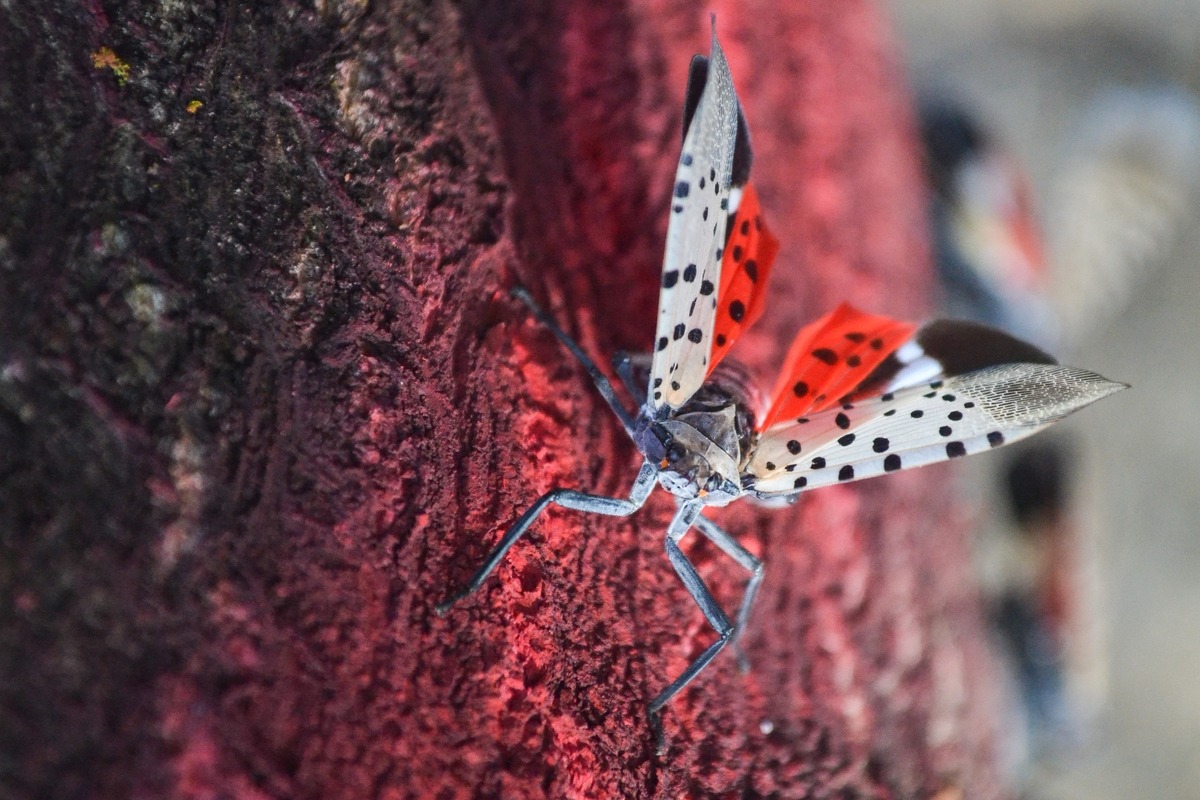
The Spotted Lanternfly is an invasive pest spreading rapidly across Ohio. It attacks over 70 plant species including grapes, apples, and hardwood trees. If you live in Avon Lake, Lorain, Bay Village, Westlake, or Sheffield Lake, your yard and garden are at risk. Identify it by its gray wings with black spots and bright red hindwings. Report sightings to the Ohio Department of Agriculture immediately — and call Pest Asset at (440) 899-2847 or visitpestasset.com for professional removal.
Does Northeast Ohio Have Spotted Lanternflies?
Yes — and the threat is growing. The Spotted Lanternfly (Lycorma delicatula) has been confirmed in multiple Ohio counties and is actively spreading westward from its original Pennsylvania infestation. Communities along Lake Erie’s southern shore — including Avon Lake, Bay Village, Westlake, Lorain, and Sheffield Lake — are particularly vulnerable due to proximity to major transportation corridors like I-90 and I-80, which are primary pathways for accidental spread.

Life Cycle: Knowing Your Enemy
Understanding the SLF’s life cycle is crucial for effective management. In Northeast Ohio, their development typically follows this pattern:
1. Egg Stage (September to May)
- Females deposit egg masses containing 30-50 eggs
- Masses appear as grayish-brown, putty-like patches about 1-1.5 inches long
- Often found on smooth surfaces inWhat Is the Spotted Lanternfly? {#what-is-the-spotted-lanternfly}
The Spotted Lanternfly is an invasive planthopper originally from China, India, and Vietnam. It is not a true fly — it’s more closely related to cicadas and aphids. First detected in the United States in Berks County, Pennsylvania in 2014, the Spotted Lanternfly has since spread to over a dozen eastern states, and Ohio is firmly in its path.
Unlike most invasive insects that target a single crop or tree species, the Spotted Lanternfly feeds on over 70 different host plants, making it one of the most economically and ecologically threatening invasive species the Midwest has seen in decades. According to the USDA Animal and Plant Health Inspection Service (APHIS), potential losses to U.S. agriculture from unchecked Spotted Lanternfly spread could reach $50 billion annually.
For homeowners in Avon Lake, Westlake, Bay Village, and surrounding communities, this isn’t just an agricultural issue — it’s a backyard problem that can devastate ornamental trees, vegetable gardens, and outdoor living spaces.
How to Identify a Spotted Lanternfly {#how-to-identify-a-spotted-lanternfly}
Adult Spotted Lanternfly (July–December)
Size: About 1 inch long, ½ inch wide
Forewings: Gray or light brown with bold black spots
Hindwings: Brilliant red with black spots and a white band — visible during flight
Abdomen: Bright yellow with black bands
Behavior: Tends to hop or walk rather than fly; gregarious (found in large groups)
Nymph Spotted Lanternfly (May–July)
Early instars (1st–3rd): Small, black with white spots
Late instar (4th): Develops distinctive red patches alongside black and white markings
Behavior: Extremely mobile and jumpy when disturbed
Spotted Lanternfly Egg Masses (September–May)
Grayish-brown, mud-like or putty-like patches, roughly 1–1.5 inches long
Contain 30–50 eggs each
Found on tree bark, rocks, outdoor furniture, vehicles, fence posts, and even patio equipment
Fresh masses look glossy; older ones look like cracked, dried mud
Common search: “What do spotted lanternfly eggs look like?” — They are often mistaken for smears of dried mud or chewing gum on tree bark.
cluding tree trunks, rocks, outdoor furniture, vehicles, and buildings - In Northeast Ohio, eggs typically hatch in late April to early May, depending on temperature

2. Nymph StagSpotted Lanternfly Life Cycle in Ohio {#life-cycle}
Understanding the Spotted Lanternfly’s life cycle helps you time your response for maximum effectiveness:
| Stage | Timing in Northeast Ohio | What to Look For |
| Egg Mass | September – May | Mud-like patches on hard surfaces |
| Early Nymphs (1st–3rd instar) | May – June | Black with white spots, very small |
| Late Nymphs (4th instar) | June – July | Black, white, AND red patches |
| Adults | July – December | Gray forewings, red hindwings |
| Peak Adult Activity | August – October | Large swarms on trees and structures |
Spotted Lanternflies do not survive Ohio winters as adults — only egg masses overwinter. This makes fall egg mass removal a critical control strategy.
Is the Spotted Lanternfly in My Neighborhood? {#high-risk-areas}
High-Risk Communities in Northeast Ohio
Spotted Lanternfly populations don’t respect town boundaries. Here are the communities in the greater Avon Lake area that face elevated risk:
- Avon Lake – Residential tree cover, proximity to I-90 travel corridor
- Lorain – Active railway lines connecting to Pennsylvania and other infested states; industrial landscaping with diverse host trees
- Bay Village – Dense suburban greenery, mature hardwood trees
- Westlake – High traffic from I-90; commercial landscaping with Tree of Heaven hosts
- Sheffield Lake – Lakefront properties with ornamental plantings attractive to Spotted Lanternfly
Where to Look
Spotted Lanternflies prefer to gather on:
- Tree of Heaven (Ailanthus altissima) — their #1 preferred host, a common “junk tree” found along Ohio roadsides and empty lots
- Grape vines, apple trees, peach trees, and hops
- Maple, oak, walnut, and black cherry trees
- Wooden fences, decks, and patio furniture in late summer
Pro tip from Pest Asset: If you have Tree of Heaven on or near your property in Lorain County, you should be checking it weekly from June through October.e (May to July)
- First through third instars (developmental stages) are black with white spots
- Fourth instar develops distinctive red patches
- Nymphs are incredibly mobile, jumping when disturbed
- In Northeast Ohio’s climate, nymphs typically develop through June and early July

Damage: What the Spotted Lanternfly Does to Plants {#damage}
Agricultural Damage
The Spotted Lanternfly is a phloem feeder — it pierces plant tissue and sucks out the sugar-rich sap that trees use to transport nutrients. This causes:
- Weeping wounds on tree trunks (look for sap oozing from bark)
- Wilting and dying branches, especially on younger trees
- Reduced fruit yield — up to 90% loss in vineyards during heavy infestations
- Weakened trees that become vulnerable to secondary disease and pests
Northeast Ohio’s agricultural economy — including Ashtabula and Lake County vineyards, orchards in Geauga County, and the region’s maple syrup industry — faces serious financial risk.
Residential and Environmental Damage
Even if you don’t grow grapes or run an orchard, the Spotted Lanternfly can still hurt your yard:
- Honeydew buildup — Spotted Lanternflies excrete large amounts of a sticky, sugary substance called honeydew, which coats leaves, outdoor furniture, and decks
- Sooty mold — Black fungal growth develops on honeydew-coated surfaces, blocking sunlight and killing plants
- Pest attraction — Ants, wasps, and hornets swarm to feed on honeydew, creating secondary pest problems
- Damaged ornamental trees — Maples, oaks, and walnuts in residential landscapes are all vulnerable
Common search: “Why is my tree dripping sticky stuff?” — This is honeydew from Spotted Lanternflies (or other sap-feeders). If accompanied by black mold, call a pest professional immediatel

How to Get Rid of Spotted Lanternflies {#management}
Step 1: Identify and Report
Before doing anything, confirm the identification and report to the Ohio Department of Agriculture Spotted Lanternfly Program. Early detection data helps state officials respond faster and protect your community.
- ODA Phone: 614-728-6400
- Online reporting: Submit via the ODA Spotted Lanternfly portal
Step 2: Remove Egg Masses (Fall & Winter)
This is the single most impactful DIY action you can take:
- Scrape egg masses off surfaces using a plastic card or putty knife
- Drop them directly into a container of hand sanitizer, rubbing alcohol, or bleach solution
- Seal and dispose in the trash — do NOT leave scraped masses on the ground, as they can still hatch
Check all of the following for egg masses:
- Tree bark (especially Tree of Heaven, willow, and maple)
- Outdoor furniture, grills, and play equipment
- Fence posts, stone walls, and brick surfaces
- Vehicles — especially the undercarriage and wheel wells if you’ve recently driven near infested areas
Step 3: Install Sticky Band Traps (Spring)
Wrap sticky bands around tree trunks 4–5 feet from the ground during May and June to catch climbing nymphs. Important: Wrap bands with a layer of window screen mesh on the outside to prevent birds and small mammals from getting stuck.
Step 4: Professional Chemical Treatment
When infestations are heavy or trees are high-value, professional treatment is the most effective and safest option. Licensed pest control professionals have access to:
- Systemic insecticides that protect trees for an entire season from the inside out
- Contact insecticides timed to peak nymph and adult activity (May–June and August–October in Northeast Ohio)
- Targeted application methods that minimize impact on beneficial insects like pollinators
🚨 When to Call a Professional
Call Pest Asset immediately if you notice:
- Large groups of Spotted Lanternflies (10 or more) on trees or structures
- Multiple egg masses on your property
- Sooty mold developing on plants or outdoor surfaces
- Signs of tree stress (weeping wounds, wilting) combined with insect activity
Don’t wait until an infestation becomes a crisis. Pest Asset serves Avon Lake, Lorain, Bay Village, Westlake, Sheffield Lake, and the surrounding Northeast Ohio communities with expert Spotted Lanternfly inspection, treatment, and prevention.
- 📞 Call or text: (440) 899-2847
- 🌐 Schedule online: pestasset.com
- 🛡️ Services include: Residential pest control, Tree & shrub treatments, seasonal insect programs, and free property assessments
Pest Asset is your local, licensed pest management team — not a national franchise. We know Northeast Ohio because we live here.
Spotted Lanternfly Seasonal Calendar for Northeast Ohio {#seasonal-calendar}
❄️ Winter (December – March)
- Scout all trees, fences, and outdoor structures for egg masses
- Scrape and destroy egg masses — this is the best time to prevent next year’s population
- Plan and order sticky band materials
- Contact Pest Asset for a winter property inspection
🌱 Spring (April – May)
- Watch for hatching nymphs (tiny, black with white spots) on Tree of Heaven and other hosts
- Install sticky bands around susceptible trees
- Apply contact insecticides if nymph populations are detected
- Report any sightings to the Ohio Department of Agriculture
☀️ Summer (June – August)
- Monitor for late-stage nymphs (red, black, and white) and early adults
- Replace or refresh sticky bands as they fill up
- Consider systemic insecticide treatments from a licensed professional for high-value trees
- Check vehicles before traveling to or from areas with known infestations
🍂 Fall (September – November)
- Peak adult activity — this is when Spotted Lanternflies are most visible and most destructive
- Inspect daily for egg-laying females on all hard surfaces
- Destroy egg masses as discovered
- Prepare a management plan for the following year — call Pest Asset for a fall consultation
Helpful Resources (Non-University, Non-Pest Control)
- 🔗 USDA APHIS Spotted Lanternfly Program — federal guidance, quarantine maps, travel tips
- 🔗 Ohio Department of Agriculture – Spotted Lanternfly — Ohio-specific reporting, confirmed county sightings, and state response updates
- 🔗 iNaturalist Spotted Lanternfly Project — citizen science sighting map; see if your neighborhood has confirmed reports
FAQ: Spotted Lanternfly Questions Answered {#faq}
❓ Can the Spotted Lanternfly hurt humans or pets?
No — Spotted Lanternflies do not bite, sting, or transmit disease to humans or animals. They are not a direct health threat, only a plant and agricultural pest. However, the large swarms can be a nuisance, and the honeydew they produce can make outdoor spaces unpleasant.
❓ Will Spotted Lanternflies kill my trees?
Healthy, mature trees can usually survive a Spotted Lanternfly infestation — but repeated, heavy feeding over multiple seasons significantly weakens trees and makes them vulnerable to other pests and disease. Young trees, grape vines, and hops are at greatest risk of being killed outright.
❓ Are Spotted Lanternflies in Lorain County, Ohio?
Spotted Lanternfly has been detected in eastern Ohio and continues to spread westward into Northeast Ohio. Lorain County communities, especially those along I-90 and rail corridors, should be actively monitoring. Check the ODA Spotted Lanternfly page for the latest confirmed detections.
❓ How do Spotted Lanternflies spread?
Spotted Lanternflies are naturally slow movers on foot — but they spread rapidly through human activity. Egg masses are laid on virtually any hard surface, including vehicles, campers, outdoor furniture, and firewood. Moving these items unknowingly transports the pest to new areas. Always inspect your vehicle before leaving an infested region.
❓ What attracts Spotted Lanternflies to my yard?
The presence of Tree of Heaven is the #1 attractant, but Spotted Lanternflies will infest yards with grape vines, fruit trees, maples, oaks, and walnuts as well. They are also attracted to large, warm vertical surfaces (like house walls and fences) in late summer when they aggregate.
❓ What should I do if I find a Spotted Lanternfly in Avon Lake or Bay Village?
- Take a clear photo
- Note the exact location (address or GPS coordinates)
- Report to the Ohio Department of Agriculture: 614-728-6400
- Call Pest Asset for an inspection: (440) 899-2847
❓ Is there a natural predator for the Spotted Lanternfly?
Research is ongoing. Certain native predatory insects and birds do eat Spotted Lanternflies, but not at rates sufficient to control populations. Scientists are studying parasitoid wasps as potential biocontrol agents. For now, mechanical removal and professional treatment remain the most effective methods.
❓ How much does Spotted Lanternfly treatment cost?
Costs vary based on property size, the severity of infestation, and the treatment method required. Contact Pest Asset for a free assessment and quote — we’ll give you a transparent, no-pressure estimate tailored to your property.
Key Takeaways & Conclusion {#conclusion}
The Spotted Lanternfly is one of the most serious invasive pest threats facing Northeast Ohio homeowners and farmers today. Here’s what every resident of Avon Lake, Lorain, Bay Village, Westlake, and Sheffield Lake needs to remember:
✅ Key Takeaways
- The Spotted Lanternfly is coming to your neighborhood — proactive monitoring is essential, not optional
- Egg masses are the #1 target — removing them in fall and winter prevents entire next-year populations
- Tree of Heaven is the canary in the coal mine — if you have it on your property, start monitoring now
- DIY methods help but have limits — professional treatment is the most effective option for established infestations
- Reporting matters — every confirmed sighting helps the state respond faster to protect agriculture and ecosystems
- Human movement is the primary spread vector — always inspect vehicles, outdoor gear, and furniture before traveling
The Bottom Line
The Spotted Lanternfly is not a pest you can afford to ignore and hope disappears on its own. With early detection, community vigilance, and professional pest management, Northeast Ohio can slow and limit its spread — protecting our farms, forests, and backyards for generations.
Pest Asset is ready to help. Whether you’ve spotted a Spotted Lanternfly, found egg masses, or just want a seasonal inspection for peace of mind, our Northeast Ohio team has the expertise and tools to protect your property.
📞 Contact Pest Asset Today
Northeast Ohio’s Spotted Lanternfly Specialists
- 📞 Call or text: (440) 899-2847
- 🌐 Visit us: pestasset.com
- 📍 Serving: Avon Lake, Lorain, Bay Village, Westlake, Sheffield Lake, and surrounding Lorain & Cuyahoga County communities
Don’t wait for a small problem to become a swarm. Call Pest Asset — your local, licensed, and trusted pest management partner in Northeast Ohio.
Last updated: April 2026 | Sources: USDA APHIS | Ohio Department of Agriculture

